
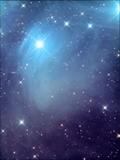
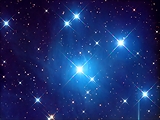
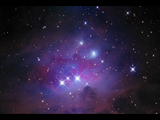
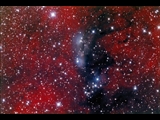
Nebulae represent clouds of gas and dust which appear as hazy or fuzzy objects when viewed through a telescope and are characterized as one of four types (emission, planetary, reflection or dark). Emission nebulae, such as the Lagoon nebula (M8), simply glow, for example, with a stunning shade of red. Planetary nebulae appear as small greenish disks through a telescope, thus emulating the planets Uranus and Neptune, as a result of gas masses being thrown off by dying stars (ex. M27, Dumbbell nebula) or represent supernova remnants (ex. M1, Crab nebula). In contrast, reflection nebulae are characterized with gas surrounding young stars which reflect the stellar light (ex. M45, Pleiades) and, thus, yield beautiful images of nebulosity. Finally, dark nebulae are detectable and studied only using parts other than the visible spectrum and are believed to be associated with the formation of stars (ex. M16 in Serpens).
| Reflection Nebula Images | |||||
|---|---|---|---|---|---|
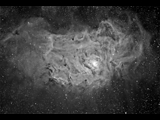 M8 in Sgr |
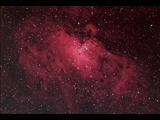 M16 in Ser |
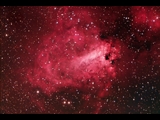 M17 in Ser |
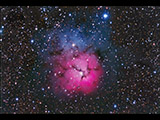 M20 in Sag |
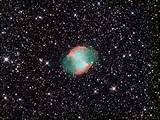 M27 in Vul |
|
 M42 in Ori |
 M43 in Ori |
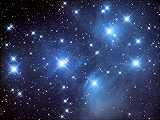 M45 in Tau |
 M57 in Lyr |
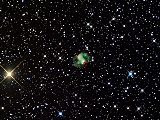 M76 in Per |
|
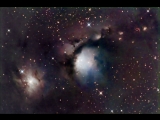 M78 in Ori |
 M97 in UMa |
||||
|
|||||
|
|
|
|
|
|
|
|||||