
Our sun and closest star is believed to be approximately 4600 million years old and is composed (by mass) of hydrogen (74.5%),
helium (23.5%) and various other heavier elements (2%) such as oxygen and carbon. Due to this gaseous state, the sun does not
rotate about its axis at one uniform rate but has the poles rotating at a slower rate than the equatorial region. It has
a central temperature of 14 million degrees whereas the surface temperature is a mere 5500 °C. With a diameter of 1.4 million
km, it is about 109 times as wide as Earth whereas with a mass of 2 x 1030 kg, it is 335,000 times more massive
than Earth. Of interest is the observation that its density of 1400 kg/m3 is only slightly more dense than
water (1000 kg/m3).
It would be trite to say that the Sun never sleeps, for it provides the interested observer a wealth of activity which is
both dynamic and breath-taking when viewed, for example, in certain wavelengths such as H-alpha. To this end, it dispells
the common misbelief that all astronomy is done under dark skies, for the sun provides a wealth of material for both
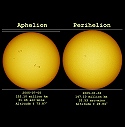
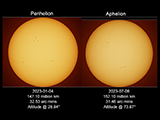
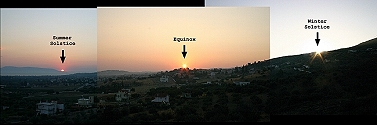
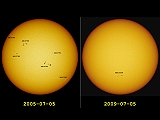
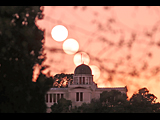
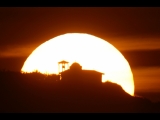
observation and imaging during the day as the sample images below suggest!
Please click on any image for a larger rendition and imaging details.
|
|
|
|
||

|
|||||
With Pegasus |
|||||

|

|

|
|||

|

|

|

|
|
|

|

|

|

|

|
|

|

|

|

|
|
|